

Eden Gardens: The Garden That Became Cricket's Theatre
We make things that work better and last longer. Our products solve real problems with clean design and honest materials.
Discover the extraordinary story of Eden Gardens, Kolkata—from its origins as a 19th-century garden to becoming one of the world's most iconic cricket stadiums. Explore historic matches, unforgettable moments, legendary players and the heritage that makes Eden Gardens a living part of Kolkata's soul.
Calcutta Watch Company | Kripanti Maity
A Story of Empire, Gardens, Crowds, Glory and the Soul of Kolkata
There are cricket stadiums that host matches. There are stadiums that create memories. And then there are a rare few places where the game seems to acquire a life beyond the players, the scorecard and the result.
Eden Gardens belongs to that rare category.
To walk towards Eden Gardens is to walk through several histories of Kolkata at once. The great Maidan stretches nearby. The Hooghly is not far away. Colonial buildings, old trees, grand institutions and the restless movement of one of India's great cities surround the stadium. Yet once the crowd enters and the roar begins, the outside world seems to disappear.
For more than a century and a half, this ground has witnessed empire and independence, elegance and fury, triumph and humiliation, the rise of Indian cricket and some of the most extraordinary moments the game has ever known.
Eden Gardens is not simply a cricket stadium in Kolkata.
It is one of the great theatres of world cricket.
And, perhaps more importantly, it is one of the places where Kolkata itself can be heard.
Before the Stadium, There Was a Garden
The story of Eden Gardens did not begin with cricket.
It began with the idea of a garden.
In the nineteenth century, when Kolkata was the capital of British India, the vast Maidan was already emerging as one of the defining landscapes of the city. It was a place of open skies, military presence, promenades, sport and recreation. At its northern edge, near the river, a landscaped pleasure ground began to take shape during the period of Lord Auckland, Governor-General of India from 1836 to 1842.
The area was initially associated with the name Auckland Circus Gardens. Contemporary accounts and later historical narratives connect its development to Lord Auckland and, particularly, to his sisters Emily and Fanny Eden, who accompanied him to India and were closely associated with the social and cultural life of colonial Calcutta.
The name that eventually endured was Eden Gardens.
There is something deeply appropriate about that name.
Long before the roar of a packed crowd and the crack of leather against willow, this was conceived as a place of greenery, leisure and escape. Trees, water, pathways and landscaped spaces created a quiet world beside the expanding colonial metropolis.
The garden came first.
The stadium arrived later.
That distinction is important because it explains why Eden Gardens has always been more than a sporting address. Even today, its identity is inseparable from the larger landscape around it: the Maidan, the river, the old trees and the historical heart of Kolkata.
Cricket did not create Eden.
Cricket inherited it.
And then transformed it forever.
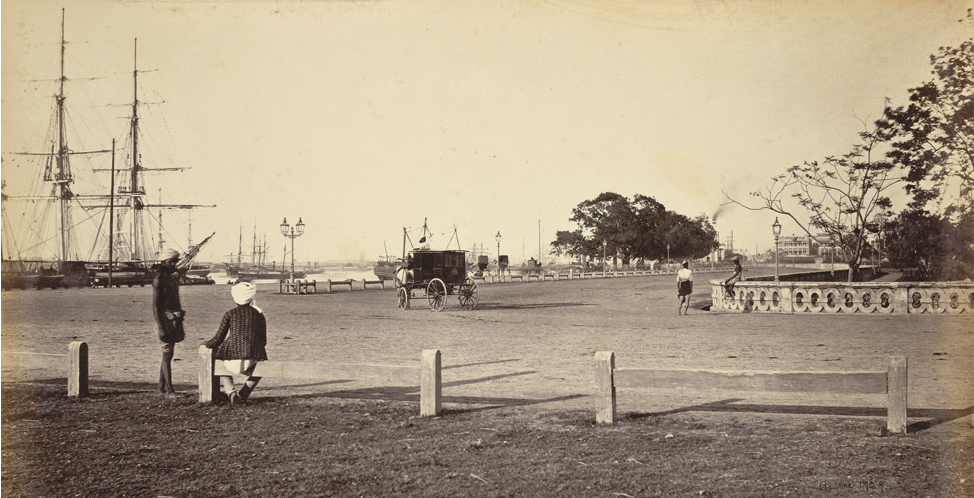
The Birth of a Cricketing Landmark
The cricket ground at Eden Gardens developed during the nineteenth century, and 1864 is widely recognised as the establishment year of the stadium. This makes Eden one of the oldest major cricket grounds in India.
The transformation was gradual rather than instantaneous.
In the early decades, cricket in Calcutta was closely connected with the city's British institutions, clubs and colonial society. The Calcutta Cricket Club had already played an important role in the sporting life of the city, while the Maidan and its surrounding spaces became an important home for organised sport.
But as cricket spread beyond colonial clubs and entered the imagination of Indians, the significance of the ground changed.
A game once associated largely with the rulers of the empire slowly became a game claimed by the people of the country.
Eden Gardens stood through that transformation.
By the time India began to emerge as a cricketing nation, the ground was no longer merely a colonial sporting field. It was becoming a national stage.
The first official Test match at Eden Gardens was played between India and England in January 1934. It was a landmark moment not only for the stadium, but for Indian cricket itself.
The game had entered one of its grandest arenas.
And Eden had begun its long journey towards becoming a place of pilgrimage for cricketers.

The Burmese Pagoda and the Older Eden
To understand Eden Gardens only through the stadium is to miss an important part of its heritage.
The wider Eden Gardens complex contains gardens, water bodies and historic structures that belong to a much older visual and cultural landscape. Among the most distinctive of these is the famous Burmese Pagoda beside the lake.
The pagoda was built in Prome, now Pyay in Myanmar, in 1852, and was transported to Calcutta in 1854. Its history is connected with the British imperial presence in Burma and the movement of cultural objects across the colonial world.
Its arrival in Calcutta reminds us that nineteenth-century Kolkata was one of the great ports and administrative centres of the British Empire. Objects, people, plants, ideas and architecture travelled through the city from across Asia.
The pagoda remains one of the most striking reminders that the original Eden was a landscaped cultural space long before the stadium became internationally famous.
There is something almost surreal about this coexistence.
On one side, the roar of cricket.
On another, an old Buddhist structure beside water and trees.
Few cricket stadiums in the world exist within such a layered historical environment.
Eden is a sporting monument, certainly.
But it is also part of a larger historical garden.
When Kolkata Began to Make Eden Its Own
No history of Eden Gardens is complete without the crowd.
The players have changed.
The teams have changed.
The architecture has changed.
But the crowd has remained the defining force.
For generations, a match at Eden Gardens meant more than a sporting contest. Cricket became a public performance, and the spectators were never passive observers.
They watched.
They judged.
They celebrated.
They argued.
They remembered.
And when the occasion demanded it, they created a noise that could seem almost physical.
Former generations of cricketers often spoke of the emotional intensity of playing before a full Eden Gardens. The crowd could reward a beautiful stroke with a roar, recognise a moment of courage and turn an ordinary contest into something approaching theatre.
The relationship between Kolkata and cricket was particularly intense because the city had always been a city of conversation and argument.
Politics was argued.
Literature was argued.
Cinema was argued.
Football was argued.
And cricket, when it arrived in Eden, was analysed with the same seriousness.
A batsman was not merely expected to score runs.
He was expected to understand the occasion.
At Eden Gardens, the occasion was often bigger than the match.
The Great Amphitheatre of Indian Cricket
Over the decades, Eden Gardens grew in size and stature.
The stadium went through several phases of expansion and reconstruction. Its galleries, once associated with much more basic structures, gradually became part of one of the largest sporting arenas in the world. By the late twentieth century, Eden had developed a reputation for crowds of extraordinary scale.
For many years, a capacity of more than 90,000 — and on some historic occasions crowds reported at around or above 100,000 — became part of the mythology of Eden Gardens.
A packed Eden was a sight unlike almost anything else in cricket.
Thousands upon thousands of spectators surrounded the field in a vast human bowl. From the middle of the ground, the stands appeared to rise endlessly. The noise could travel like a wave.
After major redevelopment ahead of the 2011 Cricket World Cup, the stadium's official seating capacity was reduced significantly as the venue moved towards modern seating and safety standards. Today, its capacity is generally listed at around 68,000, making it one of India's largest cricket stadiums.
The number may have changed.
The scale of its reputation has not.
1987: When the World Cup Came to Eden
One of the most important days in the history of Eden Gardens came on 8 November 1987.
The stadium hosted the final of the Cricket World Cup.
The significance of that moment extended far beyond Kolkata.
The 1987 tournament was the first World Cup to be held outside England, with India and Pakistan jointly hosting the competition. Eden Gardens was chosen for the final, placing Kolkata at the centre of a historic transformation in world cricket.
The finalists were Australia and England.
Australia batted first and scored 253 for 5. David Boon played a vital innings of 75, while the Australian side produced a strong finish. England's chase remained alive until the closing stages, but Australia held their nerve.
England finished on 246 for 8.
Australia won by seven runs.
It was, at the time, the closest margin in a World Cup final.
As the Australian players celebrated under the Kolkata sky, Eden Gardens had entered another chapter of cricketing history.
For decades, the World Cup final had belonged to Lord's.
Now, the game had found another great stage.
Eden Gardens had announced itself to the global sporting world.
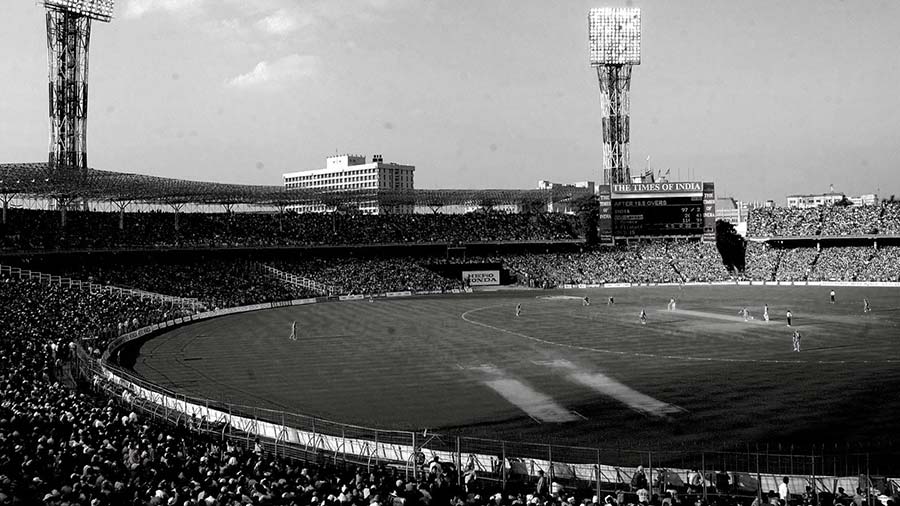
The Arrival of the Floodlights
The next major transformation came with light.
In the early 1990s, the Cricket Association of Bengal undertook the construction of floodlight towers at Eden Gardens. The arrival of day-and-night cricket changed the visual identity of the stadium.
There was something magical about Eden after sunset.
The enormous crowd.
The dark Kolkata sky.
The floodlights rising above the stands.
The bright rectangle of the field below.
During the 1993 Hero Cup, Eden Gardens became a major stage for international day-night cricket. The tournament, organised to commemorate the Diamond Jubilee of the Cricket Association of Bengal, brought several leading international sides to India.
The stadium hosted the knockout stages.
And one of the tournament's most memorable moments came in the semifinal between India and South Africa.
India defended a narrow total.
The match came down to the final moments.
South Africa needed six runs from the final over, bowled by Sachin Tendulkar.
The batsman was Brian McMillan.
The tension was unbearable.
Tendulkar held his nerve.
India won by just two runs.
The Eden crowd erupted.
A few days later, India defeated the West Indies in the final at the same venue to win the Hero Cup.
The tournament remains an important chapter in the stadium's transition into the era of floodlit international cricket.
1996: Eden's Darkest Day
Great historical places do not contain only beautiful memories.
They also remember their failures.
On 13 March 1996, Eden Gardens hosted the first semifinal of the Cricket World Cup between India and Sri Lanka.
Sri Lanka batted first and scored 251 for 8.
India began their chase brilliantly. Sachin Tendulkar and Manoj Prabhakar gave the home side a promising start, and for a brief moment, Eden believed.
Then everything collapsed.
After Tendulkar was dismissed, India fell dramatically. The score plunged from 98 for 1 to 120 for 8.
The disappointment inside the stadium became anger.
Objects were thrown onto the field. Fires were lit in parts of the stands. Play was interrupted, and despite attempts to resume the match, the situation could not be controlled.
Match referee Clive Lloyd eventually awarded the match to Sri Lanka by default.
The image of a devastated Indian team leaving the field became one of the darkest images in Indian cricket.
Eden Gardens had become a global symbol of cricketing passion at its most destructive.
Yet this moment, however painful, is also part of the stadium's history.
Heritage is not the selective preservation of only happy memories.
A true historical place carries its entire past.
Eden remembers the triumphs.
It also remembers the night when passion crossed the line.
2001: The Miracle at Eden
If 1996 was Eden's darkest memory, then March 2001 produced one of its greatest acts of redemption.
India faced Australia in the second Test of a series.
Australia were the dominant team in world cricket.
They had already won the first Test in Mumbai.
At Eden Gardens, they appeared to have India trapped again.
Australia scored 445 in their first innings.
India were bowled out for 171.
Steve Waugh enforced the follow-on.
The match seemed finished.
What followed became legend.
VVS Laxman, who had scored 59 in the first innings, was promoted up the order. Rahul Dravid joined him.
Together, they batted through an extraordinary day.
Laxman produced one of the greatest innings in the history of Test cricket: 281 runs.
Dravid stood beside him for 180.
Their partnership produced 376 runs.
It was not simply a partnership.
It was a rescue operation.
India transformed an impossible situation into a position of strength. By the time Australia began their second innings, the entire emotional atmosphere of the stadium had changed.
Then came Harbhajan Singh.
Already the first Indian bowler to take a Test hat-trick, Harbhajan completed one of the greatest individual performances in Indian cricket.
Australia were eventually bowled out.
India won by 171 runs.
The impossible had happened.
India had won after being asked to follow on.
The stadium exploded.
For many cricket lovers, the Kolkata Test of 2001 remains the greatest match ever played at Eden Gardens.
But its importance goes even further.
The victory is often seen as a turning point in modern Indian cricket. It gave the team a new belief that the most powerful opponents could be challenged and defeated.
Laxman's 281.
Dravid's 180.
Harbhajan's hat-trick.
The roar of Eden.
Together, they became part of cricketing mythology.

A Stadium of Records, Legends and Homecomings
Over the years, Eden Gardens has belonged to every generation.
It has witnessed the artistry of VVS Laxman, the determination of Rahul Dravid, the brilliance of Sachin Tendulkar and the rise of Sourav Ganguly — Kolkata's own "Maharaj", whose relationship with the city gave Eden another emotional dimension.
It has seen Anil Kumble, Harbhajan Singh and Bishan Singh Bedi spin their webs.
It has welcomed visiting giants from across the cricketing world.
Gary Sobers.
Viv Richards.
Sunil Gavaskar.
Kapil Dev.
Wasim Akram.
Shane Warne.
Ricky Ponting.
Steve Waugh.
Jacques Kallis.
Brian Lara.
And generations of players who understood that performing at Eden Gardens meant performing before one of the most demanding audiences in the sport.
The Cricket Association of Bengal, headquartered at the Eden Gardens complex, has been central to the administration and development of cricket in the region.
The stadium is also the home ground of Bengal cricket and, in the modern era, became the spiritual home of the Kolkata Knight Riders.
The arrival of the Indian Premier League gave Eden another generation of supporters.
The colours changed.
The format became faster.
The music became louder.
But the fundamental relationship between Kolkata and the stadium remained the same.
The crowd came to participate.
Beyond Cricket: Eden as a Cultural Landmark
Eden Gardens has never existed in isolation.
It is part of Kolkata's cultural geography.
For years, the larger complex and surrounding area have connected sport, recreation, public gatherings and entertainment. The nearby gardens, water bodies and historic structures belong to a landscape that predates the stadium itself.
The complex also includes the Netaji Indoor Stadium, adding another layer to the sporting identity of the area.
Eden Gardens has hosted not only cricket, but major events and cultural occasions. Like other great stadiums of the world, it has gradually evolved into a public landmark capable of holding moments that extend beyond sport.
Yet cricket remains its deepest language.
A concert may fill the stadium.
An event may transform the ground.
But when international cricket returns, Eden seems to become itself again.
The Architecture of Memory
The architecture of Eden Gardens has changed dramatically over the decades.
The early ground was not the giant arena seen today. Stands were built, expanded and rebuilt. Wooden structures gave way to stronger galleries. Seating increased. Floodlights transformed the skyline. Modern facilities arrived.
Ahead of the 2011 World Cup, the stadium underwent one of its most significant modern transformations.
And yet Eden retains something that cannot be built.
Memory.
The old photographs are proof.
Black-and-white images show a different stadium, but the same field.
Old crowds appear in another era, yet the intensity is recognisable.
The galleries may have changed.
The scoreboard may have changed.
The players certainly have.
But the essential idea remains remarkably constant.
A huge crowd gathers around a field in Kolkata.
And for a few hours, nothing seems more important than what happens in the middle.
That is Eden Gardens.

Why Eden Is Different
Every great stadium has its own personality.
Lord's has ceremony.
The Melbourne Cricket Ground has scale.
The Sydney Cricket Ground has elegance.
But Eden Gardens has emotion.
It is one of the few sporting venues where the crowd itself has become part of the mythology of the place.
The famous saying that a cricketer's education is incomplete until he has played before a packed Eden Gardens is not an official measurement of greatness.
It is a recognition of atmosphere.
To stand in the middle of Eden with tens of thousands of people watching is to experience cricket as public theatre.
Every appeal becomes louder.
Every boundary becomes larger.
Every wicket becomes a collective event.
At its best, the Eden crowd has been celebrated for its ability to appreciate cricket beyond narrow loyalties — to applaud greatness, courage and artistry.
At its worst, as history has shown, that same emotional intensity can become overwhelming.
That contradiction is part of Eden's personality.
It is not a silent museum.
It is a living stadium.
And living places are never simple.
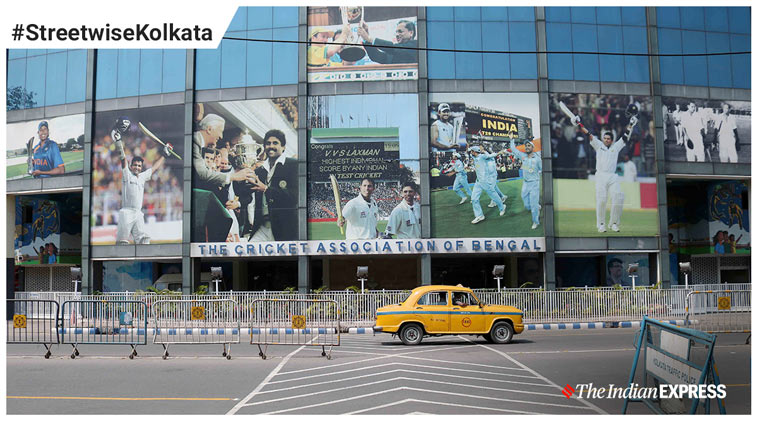
Eden Gardens and the Heritage of Kolkata
Perhaps the most remarkable thing about Eden Gardens is that its history mirrors the history of Kolkata itself.
It began in the colonial era.
It grew within the British imperial city.
It witnessed the Indianisation of a colonial game.
It became a national sporting symbol after Independence.
It expanded with the confidence of a growing country.
It entered the television age.
It embraced floodlights and one-day cricket.
It became part of the global World Cup story.
It survived controversy.
It created miracles.
And it continues to reinvent itself.
That is why Eden Gardens should not be understood merely through statistics.
Its number of seats may change.
Its boundaries may change.
Its facilities may be modernised.
But its historical value lies in continuity.
The same ground has connected generations who lived in entirely different Indias.
A spectator in the 1930s.
A fan in the 1960s.
Someone who watched the 1987 World Cup final.
A person who lived through the heartbreak of 1996.
A child who saw the miracle of 2001.
A modern supporter cheering the Kolkata Knight Riders.
Different generations.
One ground.
The Garden That Still Roars
More than 160 years after the cricket ground was established, Eden Gardens remains one of the world's most recognisable sporting addresses.
Its story began with a garden.
A landscaped space created for leisure beside the great river and the Maidan.
Then came cricket.
And gradually, the quiet garden became a stadium.
The stadium became an arena.
The arena became a theatre.
And the theatre became a legend.
There are older grounds.
There are larger stadiums.
There are newer and more technologically advanced venues.
But history cannot be manufactured.
It must be lived.
Eden Gardens has lived through generations.
It has heard the applause of people who are long gone. It has watched champions rise and fall. It has seen empire disappear and a new sporting nation emerge. It has carried both the pride and the pain of millions.
Its greatest inheritance is not its concrete, steel or seating capacity.
It is memory.
And perhaps that is why, even after all these years, Eden Gardens still feels alive.
Because somewhere beneath the modern stadium lies the memory of the old garden.
Somewhere beyond the roar of the crowd are the trees, the water, the pagoda and the older Kolkata landscape from which this extraordinary place emerged.
Eden Gardens is not merely where cricket is played.
It is where cricket becomes history.
And when the stands are full, the lights are on, the city is listening and the first great roar rises into the Kolkata night, one can almost understand why generations of cricketers have treated Eden not simply as a venue, but as a place of arrival.
A garden became a ground.
A ground became a stadium.
And a stadium became one of the eternal homes of cricket.
That is Eden Gardens.
That is Kolkata.
And that roar still belongs to history.
CWC — Calcutta Watch Company
Inspired by stories that move through time.
Heritage on Your Wrist.
____________
Explore CWC: Calcutta Watch Company - CWC (Official Website)
Our Socials:
Facebook: https://www.facebook.com/calcuttawatchcompany
Instagram: https://www.instagram.com/calcuttawatchcompany.in/
YouTube: https://www.youtube.com/@calcuttawatchcompany
X (Twitter): https://x.com/thecwcin
WhatsApp: https://www.whatsapp.com/channel/0029Vb8QtxpGk1Fu0BQhvH1Y
Telegram: https://t.me/calcuttawatchcompany


