

Mallabhum : The Malla Kingdom of Bishnupur
We make things that work better and last longer. Our products solve real problems with clean design and honest materials.
Long before Bishnupur became Bengal’s terracotta capital, it was the heart of Mallabhum, the kingdom of the Malla rulers. From Adi Malla and Bir Hambir to the great temples, Vaishnava court, Maratha invasions and the decline of the royal estate, discover the history of the kingdom that turned Bengal’s red earth into art.
Calcutta Watch Company | Kripanti Maity
The Kingdom That Turned Bengal’s Red Earth into Art
There are places in Bengal where history is not preserved inside a museum but remains embedded in the landscape itself. Bishnupur is one of those places. Here, the red laterite earth, ancient tanks, terracotta-covered temples, forgotten gateways, old fortifications, Krishna shrines, Baluchari silk and the continuing sound of classical music all belong to a history that stretches across many centuries. Long before Bishnupur became one of Bengal’s most celebrated heritage destinations, this region was known as Mallabhum—the land associated with the Malla rulers. The name survives today not merely as a historical label but as a reminder of one of Bengal’s longest-lived regional kingdoms, a polity that developed in the forested western part of the Bengal region, expanded its influence across a large territory, negotiated with larger imperial powers, patronised religion and the arts, survived through political change and eventually declined under the pressures of war, famine, debt and colonial revenue administration. The town now known as Bishnupur was for centuries the principal political and cultural centre of this world, and the heritage that survives there today is the material remains of Mallabhum’s long transformation from a frontier kingdom into one of the most remarkable cultural centres of Bengal. The Government of West Bengal and the Bankura district administration both identify Bishnupur as the historic centre of the Malla kingdom, while UNESCO recognises its temples as a major architectural ensemble currently placed on India’s World Heritage Tentative List.
WHAT DOES “MALLABHUM” MEAN?
The word Mallabhum is generally understood as a combination of Malla, meaning wrestler, fighter or strongman in Sanskrit-derived usage, and bhumi, meaning land or territory. The simplest historical interpretation is therefore “the land of the Mallas” or “the land of the Malla rulers.” Older historical accounts also explain the name through the traditional story of the dynasty’s founder, Adi Malla, who was said to have earned his title because of exceptional ability in wrestling and combat. At the same time, historians have noted that the word Malla may also have connections with the names of local tribal or regional communities, and the exact ethnographic origin of the royal title remains debated. What is certain is that by the historical period in which the Bishnupur Rajas were established as a recognised ruling house, Malla had become the defining dynastic name and Mallabhum the name of the territory ruled by them. The term therefore describes not merely a geographic area but a political landscape created by the expansion of the Malla dynasty.
BEFORE THE GREAT MALLA KINGDOM
The earliest history of the region is considerably older than the Malla dynasty and much less securely documented. The wider area of present-day Bankura formed part of the ancient Rarh region of Bengal and contained forests, river valleys, settlements and communities whose political organisation changed over many centuries. The later Malla kingdom grew in an environment very different from the densely populated riverine plains of eastern Bengal. The Damodar, Dwarakeswar and Shilabati river systems, extensive sal forests and relatively difficult terrain helped create a naturally protected frontier zone. Older district histories describe the Malla country as a region of forested uplands and frontier settlements where local rulers could maintain considerable autonomy from the great powers of the Bengal plains. This geography would become one of the most important reasons why the Malla kingdom survived for so many centuries.

The modern temptation is to imagine Mallabhum as a kingdom with fixed borders similar to a modern district. It was not. Its territory changed over time. At different moments, the Malla rulers controlled or claimed areas corresponding to much of present Bankura and portions of neighbouring regions that are now divided among Bardhaman, Paschim Medinipur and the old Manbhum-Singhbhum zone. Historical reconstructions suggest that at its greatest extent the kingdom reached far beyond the immediate Bishnupur area, while later eighteenth-century revenue surveys show a considerably reduced territory. Mallabhum should therefore be understood as a changing political sphere rather than a permanently fixed geographic unit.
ADI MALLA AND THE BEGINNING OF THE DYNASTY
The traditional foundation of the Malla dynasty centres on Adi Malla, whose reign is commonly placed in the late seventh century and often dated to around 694 CE. The story preserved in local traditions is dramatic. According to one version, a Rajput prince travelling toward Puri stopped in the region of Laugram, where his pregnant wife gave birth to a son. The child, traditionally named Raghunath, was left behind under the care of local guardians and grew up in a rural environment. As the story continues, he became an extraordinary wrestler and warrior, defeated a local ruler and established himself as king. The title Adi Malla—literally the original or foremost wrestler—was then associated with him. Another traditional version tells of an elephant carrying the boy and placing him upon an empty throne after the death of a local ruler. These narratives belong to the dynastic tradition of the Bishnupur Rajas and cannot be treated as straightforwardly documented biography. Later scholars have also questioned the claimed Rajput ancestry and emphasised the possibility of a more complex local origin. The important historical point is that the Malla dynasty traces its foundation to this figure and that Adi Malla became the symbolic ancestor of the royal line.
The traditional chronology says that Adi Malla first ruled from Laugram, and the early kingdom was initially very small. His successors gradually expanded its territory by defeating or absorbing neighbouring chiefs and extending control over nearby settlements. Jay Malla, identified in the Bankura district history as Adi Malla’s successor, is traditionally credited with capturing Padampur and shifting the political centre toward Bishnupur. The precise chronology of the earliest centuries should be treated cautiously because the full dynastic list preserved in later family records is not independently verifiable king by king. Nevertheless, the local historical tradition consistently presents the early Mallas as a dynasty that expanded gradually from a small frontier principality into a substantial regional kingdom.
JAGAT MALLA AND BISHNUPUR
Among the early Malla rulers, Jagat Malla, traditionally counted as the tenth king, occupies a particularly important place in Bishnupur’s foundation story. The Bankura district administration records that Jagat Malla shifted the kingdom’s capital to Bishnupur, while West Bengal Tourism places the naming and development of Bishnupur in the late tenth century. Local historical traditions associate this phase with the establishment of Bishnupur as the political centre of the Malla realm. The name Bishnupur itself derives from Vishnu, reflecting the later religious identity that became increasingly prominent in the kingdom. The city that would eventually become famous for terracotta temples was therefore not originally created as an art centre; it developed first as the capital of a regional royal house and only later became the extraordinary cultural landscape that survives today.
The forests and river systems around Bishnupur helped the Malla rulers preserve their autonomy at a time when Bengal was repeatedly being reorganised by larger powers. From the era of the Sena dynasty to the conquest of Bengal by Bakhtiyar Khalji and later the rise of the Bengal Sultanate, political power in the plains changed repeatedly. The old historical accounts of Bishnupur emphasise that the Malla rulers were often protected by their frontier geography and were not subjected to the same degree of direct interference as the major political centres of eastern Bengal. This does not mean that Mallabhum existed entirely outside wider Bengal politics; rather, it was a border kingdom whose rulers survived by a mixture of local strength, geography, diplomacy and political accommodation.

THE MALLAS AND THE GREAT POWERS OF BENGAL
One of the most interesting questions in Mallabhum’s history is whether the Malla kings were ever completely independent. The answer changes according to period. In the earlier centuries, the dynasty appears to have enjoyed considerable autonomy, but from the later sixteenth and seventeenth centuries onward the Bishnupur rulers increasingly operated within the political orbit of the Mughals and later the Nawabs of Bengal. Instead of imagining a simple sequence in which an emperor conquered Mallabhum and replaced the Malla king, it is more accurate to see a gradual transformation from frontier autonomy to tributary status. The Malla rulers retained their internal authority for long periods while acknowledging the sovereignty of larger imperial powers and making tribute payments.
The decisive phase came during the reign of Bir Hambir, traditionally counted as the forty-ninth Malla ruler. He flourished during the late sixteenth and early seventeenth centuries and was contemporary with Mughal Emperor Akbar. Historical accounts associate him with the Mughal campaign against Afghan forces in eastern India. During the conflict involving Mughal general Man Singh and Afghan power under Qutlu Khan Lohani, Bir Hambir supported the Mughal side and provided military assistance. This relationship gave Mallabhum an important place within the political system of late-sixteenth-century Bengal. The Malla kingdom was no longer simply an isolated forest principality; it was now participating directly in the military and political affairs of the Mughal frontier.
BIR HAMBIR — THE KING WHO CHANGED MALLABHUM
Bir Hambir is remembered not only because he was a powerful ruler but because his reign transformed the cultural direction of Bishnupur. According to Vaishnava traditions, he encountered Srinivasa Acharya, who was travelling with important Vaishnava manuscripts from Vrindavan toward Bengal. The traditional account says that Bir Hambir’s men robbed the travelling group, after which the king encountered Srinivasa’s learning and devotional scholarship. Moved by Srinivasa’s interpretation of the Bhagavata, Bir Hambir accepted Vaishnavism and became a patron of the movement. The Bankura district administration and local historical traditions both preserve this episode as a defining moment in the transformation of Bishnupur from a predominantly Shakta royal centre into one of Bengal’s major Vaishnava cultural landscapes.
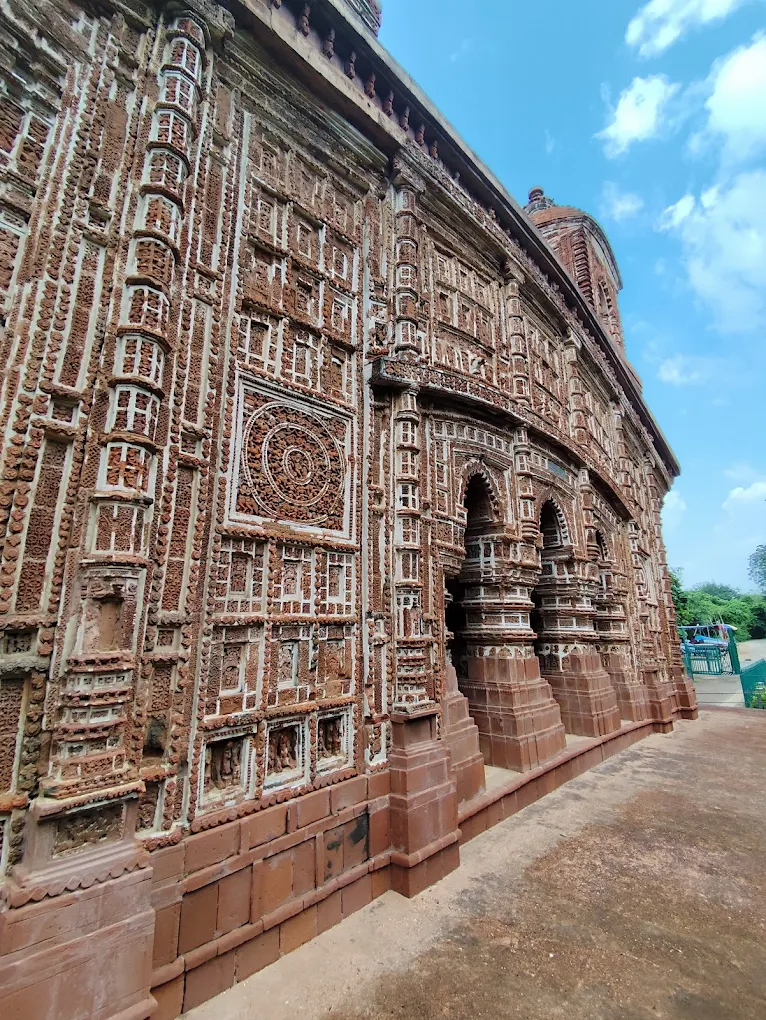
The change was profound. The Malla rulers increasingly patronised Krishna worship, Vaishnava literature, temple building and religious art. Bishnupur began developing the distinctive cultural identity that would eventually make it famous: a courtly environment in which religion, music, painting, sculpture, architecture and literature reinforced one another. The transition was not necessarily a complete replacement of older traditions; the Malla kingdom continued to contain multiple forms of Hindu worship and demonstrated a degree of religious pluralism. Historical accounts even record royal patronage and land grants to Muslim saints, while local tradition remembers shared participation by Hindu and Muslim communities in some festivals. The cultural history of Mallabhum was therefore more complex than a simple story of one religious tradition replacing another.
THE RISE OF TERRACOTTA BISHNUPUR
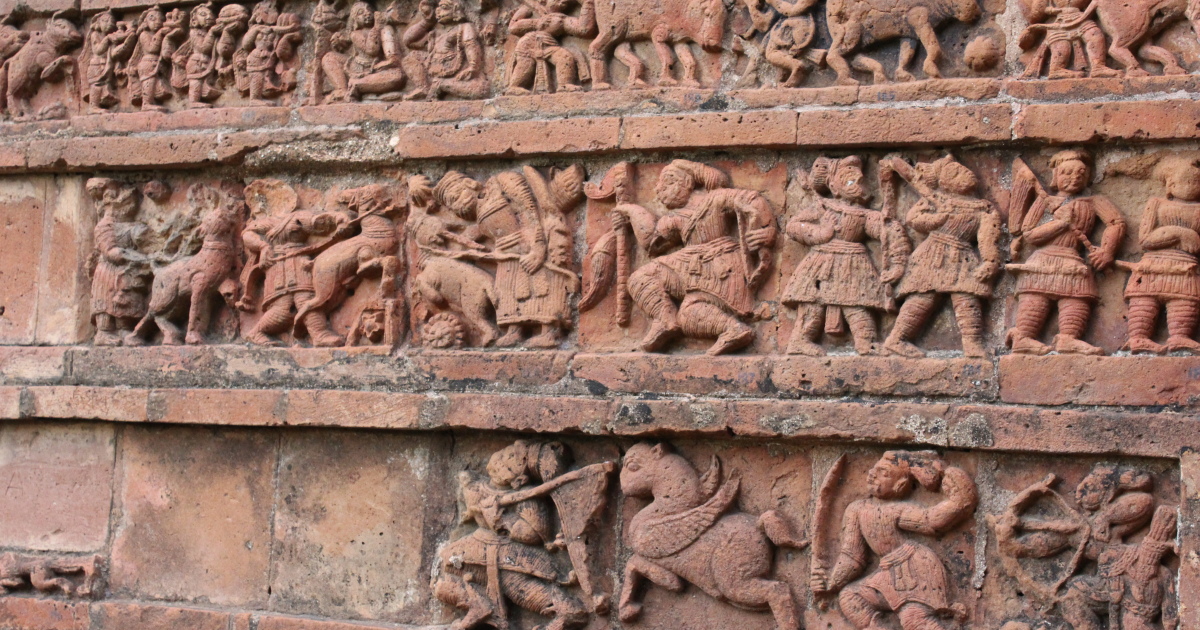
The world-famous terracotta architecture of Bishnupur belongs principally to the seventeenth and eighteenth centuries, especially the period beginning with Bir Hambir and reaching extraordinary refinement under his successors. West Bengal Tourism, the Bankura district administration, the Bishnupur Municipality and UNESCO all identify this architectural tradition as one of the defining achievements of the Malla period. Because suitable building stone was relatively scarce in Bengal, local architects and artisans developed sophisticated techniques using fired brick and terracotta, creating temples whose walls became vast narrative surfaces. The panels depict episodes from the Ramayana and Mahabharata, stories of Krishna, scenes from the Puranas, musicians, animals, warriors, courtly figures, plants and elements of everyday life. The temples are therefore not merely places of worship. They are visual documents of seventeenth-century Bengal.
The Rasmancha, traditionally dated to 1600, represents one of the earliest monumental expressions of this style and is associated with Bir Hambir. Unlike an ordinary temple with a single fixed shrine, the Rasmancha functioned as a ceremonial structure in which images of deities could be brought together during the Rasa festival. Its pyramidal form, wide platform and surrounding galleries make it architecturally unique. UNESCO's tentative-list documentation identifies the Rasmancha as a distinctive structure whose form differs from the later ratna temples of Bishnupur. It stands today as one of the most recognisable symbols of Mallabhum’s architectural imagination.
RAGHUNATH SINGHA AND THE GOLDEN AGE
After Bir Hambir, the kingdom entered an extraordinary period of architectural and cultural patronage under Raghunath Singha and his successors. The Bankura district history identifies Raghunath as the first Bishnupur ruler to use the Kshatriya title “Singh,” traditionally associated with recognition from the Mughal-era provincial authorities. It was during this period that some of the temples for which Bishnupur is famous were constructed. The Shyam Rai Temple, completed in 1643, is the great Pancha-Ratna masterpiece associated with Raghunath Singha, while the Jor Bangla Temple, generally dated to 1655, represents an ingenious transformation of the traditional Bengali hut form into monumental brick architecture. The Kalachand Temple also belongs to this phase of intense construction.
The temples of this period show how confidently the Malla architects adapted local Bengali forms into monumental architecture. Curved cornices derived from thatched village roofs were translated into brick. Multiple ratna towers were placed above square sanctuaries. Terracotta panels transformed walls into storybooks. The result was neither a direct imitation of northern Indian temple architecture nor a simple continuation of rural Bengali buildings. It was a distinctly regional language. UNESCO describes Bishnupur’s temples as an important expression of Bengal’s architectural traditions, including Eka-Ratna and Pancha-Ratna forms, and specifically identifies the 1643 Shyam Rai temple and 1655 Jor Bangla temple as major examples.
BIR SINGHA AND THE ROYAL LANDSCAPE
The next important ruler was Bir Singha, who continued the royal programme of construction and water management. The Bankura district history attributes to him the construction of the present fortifications, the Lalji Temple in 1658, and several large tanks, including Lalbandh, Krishnabandh, Gantatbandh, Jamunabandh, Kalindibandh, Shyambandh and Pokabandh. These tanks were more than ornamental features; in a semi-arid part of Bengal, water management was essential to settlement and agriculture. The royal landscape therefore combined defence, water storage, worship and urban planning.

This is an important part of Mallabhum’s heritage that can easily be overlooked when the story is reduced to terracotta temples. The Malla kings were not simply patrons of religious architecture. They were rulers of a difficult ecological zone who had to manage water, agriculture, forests, roads and military defence. The great tanks of Bishnupur are physical evidence of that statecraft.
DURJAN SINGHA AND MADANMOHAN
Durjan Singha, who succeeded Bir Singha, is remembered especially for the Madanmohan Temple, founded in 1694 according to the temple inscription and ASI documentation. The temple is an extraordinary example of the Eka-Ratna form, with a square sanctuary mounted on a laterite plinth and crowned by a single tower. Its terracotta decoration includes episodes from Krishna's life, the Ramayana and other religious narratives. The Archaeological Survey of India recognises Madanmohan as a centrally protected monument of national importance.
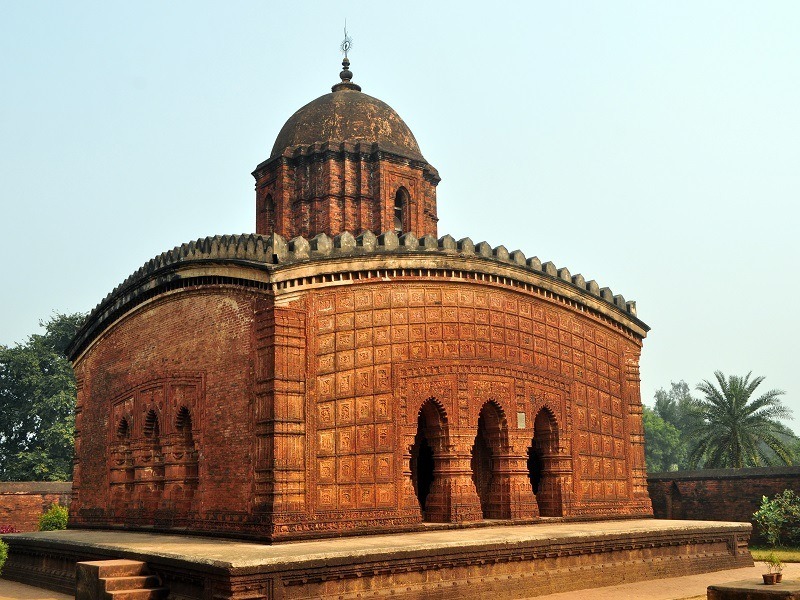
Madanmohan also became the centre of one of Bishnupur’s most enduring legends. During the Maratha attacks of the eighteenth century, local tradition says that the deity himself appeared to defend the kingdom and that he fired the famous Dalmadal cannon against the invading forces. Historians distinguish clearly between the documented Maratha incursions and the miraculous story of divine intervention. The cannon is historical; the belief that Madanmohan personally operated it belongs to the religious memory of Bishnupur. That distinction does not make the legend insignificant. On the contrary, it shows how historical events became absorbed into the devotional imagination of the community.
THE DALMADAL CANNON AND THE BARGI YEARS
The eighteenth century brought a much darker chapter. The Maratha incursions, remembered in Bengal as the Bargi attacks, devastated wide areas of western Bengal. Bishnupur and Birbhum were particularly vulnerable because of their frontier position. The Bankura district administration records that the Maratha forces failed to capture the fort or plunder the main treasury but devastated less-protected parts of the kingdom, while a Maratha chief established a headquarters at Bishnupur in 1760 during the wider conflicts of the period. The raids placed enormous pressure on agriculture, population and royal finances.

The Dalmadal cannon became the most enduring physical symbol of this period. The enormous iron cannon, more than three metres long and associated with Bishnupur’s military history, survives today as a monument. A Persian inscription is present on the weapon, and its existence demonstrates that the Malla kingdom possessed substantial metalworking and military capabilities. The famous story that Madanmohan himself fired the weapon during the Maratha invasion belongs to the realm of sacred legend rather than independently documented battlefield history, but it remains deeply woven into Bishnupur’s cultural identity.
THE NAWABS OF BENGAL AND THE LOSS OF INDEPENDENCE
By the seventeenth century, the Malla rulers had gradually lost some of the complete independence they may once have enjoyed. The Bankura district history states that they continued to pay tribute to Muslim rulers while retaining considerable freedom over internal affairs. Their status was increasingly that of a tributary or semi-autonomous regional power. The relationship was therefore not one of constant direct occupation. Instead, the Malla king remained in place while acknowledging a larger sovereign authority. This political arrangement was typical of many frontier and zamindari states within the Mughal and post-Mughal world.
In 1715, during the period of Nawab Murshid Quli Khan, a diwani sanad was granted to the Bishnupur Raja, according to historical scholarship on Bengal's agrarian administration. This formalised the position of the Raja within the changing revenue system. The Malla ruler continued to exercise local authority, but his relationship with the larger Bengal state had become increasingly tied to land revenue and political recognition. The once-powerful frontier kingdom was gradually being transformed into something closer to a zamindari estate.
GOPAL SINGHA AND THE BEGINNING OF THE LONG DECLINE
The Malla kingdom reached the height of its cultural reputation in the seventeenth century, but the eighteenth century brought a combination of external attacks, internal political disputes and financial pressures. Gopal Singha, who ruled during the first half of the eighteenth century, is remembered in local history as a deeply religious ruler who instructed his people to chant the name of God every evening. Yet devotion could not protect the kingdom from the economic pressures of war and political fragmentation. The Maratha raids exposed the vulnerability of the countryside, and the destruction of agricultural production gradually weakened the fiscal foundation upon which the royal court depended.

At the same time, the expanding power of the Burdwan Raj reduced portions of Bishnupur territory. Historical accounts record the seizure of the Fatehpur Mahal by the Maharaja of Burdwan before the Maratha devastation. Mallabhum was therefore shrinking from several directions: powerful neighbours were taking territory, Maratha armies were attacking the countryside and the growing revenue demands of the Bengal state were placing additional pressure on the Malla household.
CHAITANYA SINGHA, DAMODAR SINGHA AND THE POLITICS OF SUCCESSION
The reign of Chaitanya Singha, traditionally dated from 1748 to 1801, became one of the most difficult periods in the history of the Malla Raj. Chaitanya was a devout Vaishnava and an important patron of religion and literature, but he faced an increasingly unstable political environment. His cousin Damodar Singha challenged his succession and sought support from the Nawab of Bengal. The old Bishnupur historical records preserve a dramatic sequence in which Damodar first received assistance from Siraj-ud-daulah, failed to capture the kingdom and later secured stronger assistance from Mir Jafar after the British victory at Plassey. Damodar's forces eventually entered Bishnupur and Chaitanya escaped with the family deity Madanmohan.

This episode demonstrates how completely the political balance had changed. A generation earlier, the Malla kings had negotiated with powerful imperial authorities as regional rulers. Now the succession of the dynasty itself had become entangled in the politics of the Nawab's court and the rising power of the East India Company. Chaitanya eventually appealed to the British in Calcutta, and colonial intervention restored him to the estate, but the political reality had changed permanently: Bishnupur was no longer an autonomous kingdom in the old sense. It was becoming a zamindari under an expanding colonial revenue regime.
1760 — MALLABHUM ENTERS THE BRITISH IMPERIAL SYSTEM
A decisive political transformation occurred in 1760, when the Burdwan Chakla, including Bishnupur, was ceded to the East India Company. The British did not immediately abolish the Malla family, but they fundamentally changed the basis of its authority. The Raja was increasingly treated as a revenue-paying zamindar rather than as a sovereign or semi-sovereign frontier prince. This shift is essential to understanding the later decline of the Malla house. The old royal state had been based on tribute, military power and local authority; the British system increasingly reduced that political structure to an estate whose survival depended on meeting fixed revenue obligations.

The transformation was accompanied by extraordinary economic hardship. The Maratha raids had already devastated the country, and the Great Bengal Famine of 1770 intensified the crisis. Population fell sharply, villages were abandoned, cultivation declined and the revenue system placed continued pressure on a region whose agricultural base had already been damaged. Historical research on eighteenth-century Bishnupur records that the royal family became increasingly indebted, while the countryside suffered both depopulation and economic collapse.
THE 1780s AND 1790s — THE KINGDOM BECOMES AN ESTATE
The British administrative reorganisation of the region continued. In 1787, Bishnupur was united with Birbhum as a separate administrative unit with headquarters at Suri; in 1793, the area was transferred to the Burdwan collectorate. These administrative changes were part of a broader transformation in which the old political geography of Mallabhum was progressively absorbed into the colonial district system. By the late eighteenth century, the word Mallabhum still carried enormous historical meaning, but the political kingdom associated with it had largely ceased to exist as an independent state.
The Malla family then faced another devastating problem: succession disputes, litigation and revenue arrears. Chaitanya Singha and Damodar Singha were involved in years of legal and political conflict, while the royal finances deteriorated. By the end of the eighteenth century, the estate had accumulated substantial debts. Historical research records that the chief deity Madanmohan was even mortgaged to a Calcutta merchant, Gokul Chandra Mitra, while the Raja struggled to meet his financial obligations. This remarkable episode symbolises how far the once-powerful Malla kingdom had fallen. A deity who had once stood at the centre of a royal capital had become collateral in a financial dispute.
1806 — THE ESTATE IS SOLD
The final economic collapse of the Malla Raj occurred in the early nineteenth century. The remaining Bishnupur estate was auctioned for arrears of land revenue on 12 November 1806, and the property was purchased by the Maharaja of Burdwan for Rs 2,15,000, according to the surviving historical account of the Bishnupur Raj. This was the effective end of the Malla estate as a major independent landed power. The dynasty did not disappear as a family, and its descendants continued to exist, but the political and economic world in which the Malla kings had ruled had ended.
The irony is striking. The Malla rulers had spent generations transforming Bishnupur into a cultural capital filled with temples, music, literature, sculpture and waterworks, yet the pressures of war, famine, political rivalry, debt and colonial revenue eventually broke the material foundations of the state. The kingdom disappeared, but the culture it created proved far more durable than the political system that had sponsored it.
MALLABHUM AFTER THE MALLA KINGS
The administrative history of the region continued to change throughout the nineteenth century. Bankura eventually emerged as a distinct district, and in 1881 the name Bankura became officially established for the district in its later colonial administrative form. Bishnupur remained an important subdivision and a historic urban centre. The old political geography of Mallabhum had disappeared, but the name survived in historical memory, inscriptions, literature and the identity of Bishnupur.

At the same time, new forms of urban and cultural life emerged. Bishnupur became increasingly known not as the capital of a kingdom but as a centre of crafts, music and heritage. Its terracotta traditions continued beyond the court. Artisans who had once served royal patrons developed and preserved techniques that entered wider markets. Baluchari weaving became one of the region's most celebrated textile traditions, while pottery, terracotta craft and the distinctive musical school of Bishnupur created cultural identities that survived the end of royal patronage. The West Bengal Tourism Department and Bishnupur Municipality continue to identify terracotta, Baluchari silk and the Bishnupur school of classical music as key components of the city's heritage.
THE BISHNUPUR GHARANA

Perhaps the most extraordinary evidence that Mallabhum's cultural influence survived the destruction of its political power is the Bishnupur Gharana of Hindustani classical music. The tradition is generally connected with the royal court's patronage of Dhrupad and with musicians who brought northern Indian classical traditions into the cultural environment of Bishnupur. By the eighteenth and nineteenth centuries, the city had developed a recognised school of music associated with the court and with teachers who transmitted the tradition across generations. Today the Bishnupur Gharana is still taught in institutions in the region and remains one of Bengal's distinctive contributions to Hindustani classical music.
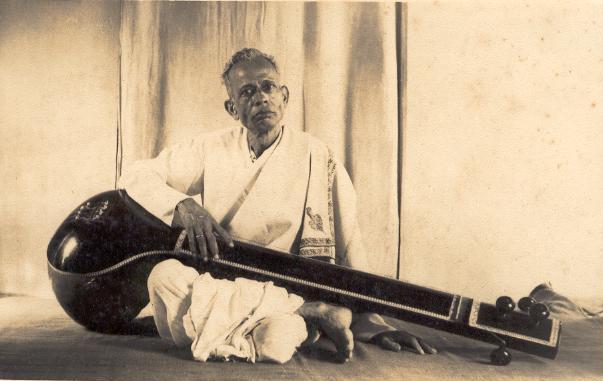
This is crucial to the story of Mallabhum because it shows that the kingdom's cultural legacy cannot be reduced to architecture. A political kingdom created a court. The court created patronage. Patronage created artistic communities. Those communities preserved traditions. And those traditions survived the political kingdom by many generations. The terracotta temple and the musical gharana are therefore two different expressions of the same historical phenomenon: the extraordinary cultural productivity of the Malla court.
MALLABHUM AS A LANDSCAPE OF WATER, WALLS AND TEMPLES
Bishnupur's heritage also survives in the physical organisation of the city. Large tanks such as Lalbandh are reminders of the engineering required to manage water in a region where drought could be a serious threat. Gateways such as the

Pathar Darwaja and Garh Darwaja preserve memories of the fortified character of the royal centre. Laterite platforms, ruined fortifications and surviving temple complexes allow modern visitors to reconstruct the shape of a city that was once both a religious centre and a fortified capital. These structures are not isolated monuments. They belong to a larger urban landscape created by the Malla state.

This is why Bishnupur should not be visited as a checklist of individual temples. Its importance lies in the relationship between the temples, tanks, roads, gateways, sacred spaces, craft traditions and surrounding landscape. The architecture makes sense when viewed as the physical expression of a society that had developed around a royal court and a powerful regional religious culture.
WHY BISHNUPUR'S TERRACOTTA IS SO IMPORTANT
The terracotta of Bishnupur is unique because it transformed a material of ordinary Bengali architecture into an extraordinary medium of narrative art. Fired clay was used to cover temple walls with intricate compositions showing gods, musicians, warriors, animals, vegetal patterns, courtly figures and scenes from epics. The surfaces preserve not only mythology but also glimpses of seventeenth-century social life. A procession carved into a temple wall can reveal details of clothing, musical instruments and transport; a battle panel may show weapons and horses; a Krishna scene can reveal the artistic conventions of the period. In this sense, the terracotta temples function like historical archives written in clay. UNESCO's Tentative List nomination emphasises the distinctive use of brick and laterite and the narrative character of the sculptural decoration.

The Jor Bangla Temple, generally dated to 1655, is especially important because its architecture appears to reinterpret two traditional Bengali village huts joined together and crowned by a tower. The Shyam Rai Temple of 1643 uses the Pancha-Ratna form and contains extensive terracotta decoration. The Madanmohan Temple of 1694 represents a refined Eka-Ratna form. Together, these buildings demonstrate that the Malla architects were not simply reproducing one standard temple type. They were experimenting with form, scale and decorative storytelling.
WHY MALLABHUM IS STILL A BENGALI HERITAGE
Mallabhum matters because it represents a part of Bengal's history that is neither purely colonial nor purely metropolitan. The story belongs to western Bengal, to the Rarh landscape, to its rivers and forests, to local communities, to a regional dynasty and to the cultural exchange that took place between the Malla court and the wider religious and intellectual world of India. Its history connects Bengal with Mughal politics, Vaishnava devotional culture, regional warfare, Maratha incursions, the Nawab administration and eventually British colonial revenue policy. Few places in Bengal compress so many historical layers into one landscape.

It also demonstrates how culture can survive political collapse. The Malla kingdom disappeared as a major political power, but the things its rulers supported did not disappear with them. The temples survived. The terracotta traditions survived. The Baluchari tradition survived. The music survived. The legends survived. The annual festivals survived. Even the name Mallabhum survived. The political state became history, but its cultural landscape became heritage.
WHY MALLABHUM MATTERS TO KOLKATA
At first glance, Mallabhum may appear to have little direct connection with Kolkata. The distance between B.B.D. Bagh and Bishnupur is substantial, and the two places developed very different historical identities. Yet Kolkata became deeply connected with Bishnupur during the later stages of the Malla kingdom. The most striking example is the story of Madanmohan, whose image was eventually pawned to the Calcutta merchant Gokul Chandra Mitra during Chaitanya Singha's financial crisis. The court cases that followed also drew the Malla family into the legal and political world of colonial Calcutta. Thus, the decline of the old kingdom was physically connected with the new colonial capital.
There is also a deeper cultural connection. Kolkata became one of the principal places where Bengal's older traditions were documented, collected, studied, commercialised and eventually turned into modern heritage discourse. Bishnupur's Baluchari textiles, terracotta craft, manuscripts, music and architectural history entered the cultural consciousness of the wider Bengal public partly through this urban network. Today, a visitor from Kolkata can travel to Bishnupur and encounter a historical world that appears distant from the colonial metropolis but is inseparable from the larger history of Bengal.
BISHNUPUR TODAY
Today, Bishnupur is a municipality and subdivision headquarters in Bankura district, West Bengal. It remains one of the state's most important heritage destinations and is particularly known for its terracotta temples, Baluchari sarees, terracotta craft, music and association with the Malla kings. West Bengal Tourism identifies Bishnupur as a historic and religious destination and notes that it is well connected to Kolkata by rail and road, with regular trains from Howrah and road links through Bardhaman, Durgapur and other parts of the state. The Archaeological Survey of India protects several of the major temple monuments, including the Madanmohan Temple, while local institutions continue to support cultural traditions associated with the city.
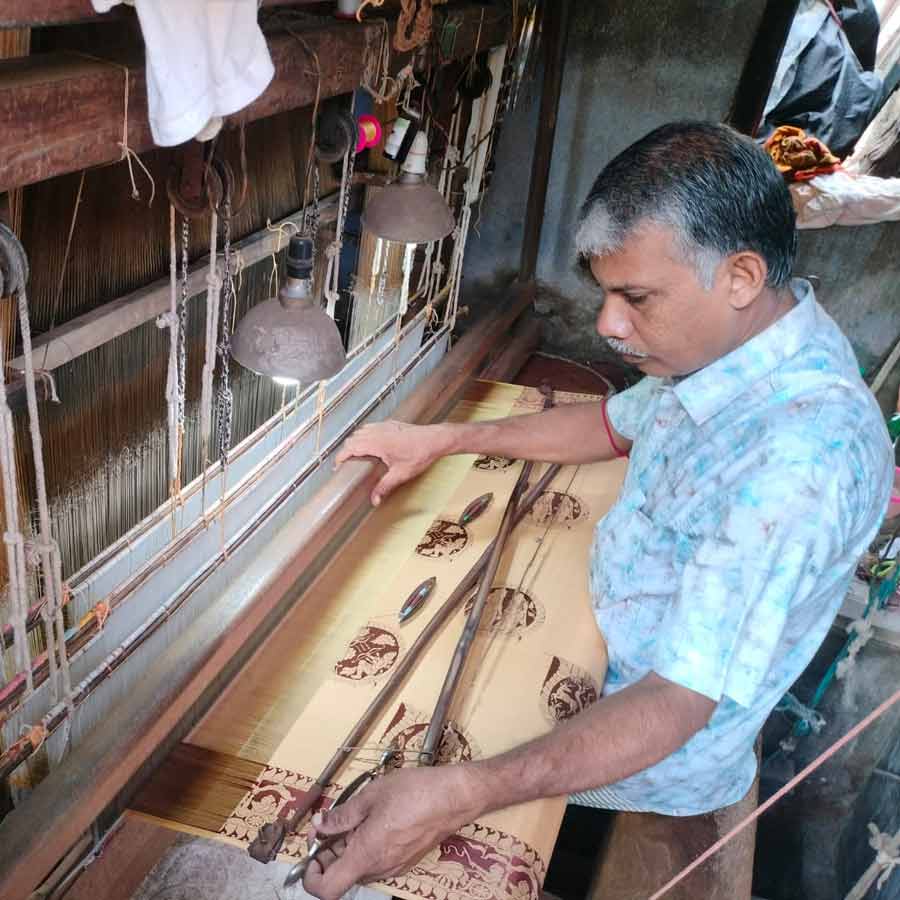
The heritage of Bishnupur is therefore not simply a collection of ruins. People still live in the city. Artisans still work. Baluchari weaving still continues. Music is still taught. Religious festivals still take place. The temples remain places of historical and cultural importance, and the town continues to attract visitors interested in Bengal's architecture, crafts and history. The relationship between the living city and the medieval-modern heritage landscape is precisely what gives Mallabhum its contemporary significance.
UNESCO AND THE HERITAGE STATUS OF BISHNUPUR
There is one important point that should always be stated accurately. The Temples at Bishnupur are not presently inscribed on UNESCO's World Heritage List. They were submitted by India to the UNESCO World Heritage Centre's Tentative List in 1998. The nomination recognises the exceptional architectural and artistic value of the temple ensemble, particularly the combination of brick, laterite, Bengali roof forms, ratna architecture and elaborate terracotta narrative panels. Being on the Tentative List means that the site has been formally identified by India as a potential future World Heritage nomination; it is not the same thing as being already inscribed as a World Heritage property.
This distinction is important for a heritage publication because Bishnupur does not need an international title to establish its historical importance. The architectural record itself is extraordinary. The surviving temples represent one of the most distinctive regional traditions in South Asian temple architecture, and the city preserves a rare combination of religious architecture, court culture, craft traditions, music and historical landscape. UNESCO's Tentative List recognition reinforces a value that historians, archaeologists and the people of Bengal have already understood for generations.
THE MALLABHUM TIMELINE
Late 7th century CE / traditionally around 694 CE: Adi Malla is traditionally regarded as the founder of the Malla dynasty. The foundation story combines dynastic legend, local memory and later historical reconstruction, so the exact circumstances of his rise should be treated as tradition rather than independently proven biography.
7th–10th centuries: Successive Malla rulers are traditionally said to have expanded their frontier principality through the conquest or incorporation of neighbouring territories. Jay Malla is credited in the Bankura district history with capturing Padampur and shifting the political centre toward Bishnupur.
Late 10th century: Jagat Malla, traditionally counted as the tenth Malla ruler, is associated with the establishment of Bishnupur as the capital and the growing prominence of the city.
16th century: The Malla kingdom becomes increasingly connected with the larger political struggles of Bengal and eastern India.
Late 16th century: Bir Hambir, traditionally counted as the 49th Malla ruler, becomes one of the dynasty's most important historical figures and establishes relations with the Mughal political order.
Around 1586–1600: Bir Hambir's reign marks a major political and cultural turning point, including his association with the Mughal campaigns against Afghan forces and his later conversion to Vaishnavism under the influence of Srinivasa Acharya.
1600: The Rasmancha is constructed under Bir Hambir, becoming one of Bishnupur's most distinctive architectural monuments.
Early 17th century: Vaishnava culture grows strongly under royal patronage, and Bishnupur develops as an important centre of Krishna worship, religious literature and artistic production.
17th century: Raghunath Singha and his successors preside over the great architectural flowering of Bishnupur.
1643: The Shyam Rai Pancha-Ratna Temple is built under Raghunath Singha.
1655: The Jor Bangla Temple is built, becoming one of the finest examples of the Bengali chala architectural vocabulary expressed in brick and terracotta.
1658: Bir Singha is associated with the Lalji Temple and major waterworks including several large tanks that shaped the royal landscape.
1665: Temples including Madan Gopal and Murali Mohan are associated with the patronage of Bir Singha's queens.
1694: Durjan Singha builds the Madanmohan Temple, one of Bishnupur's most important Eka-Ratna monuments.
Early 18th century: The political independence of the Malla rulers increasingly weakens as they operate under the suzerainty of the Nawabs of Bengal and become increasingly integrated into the regional revenue system.
1715: A diwani sanad associated with Nawab Murshid Quli Khan formalises the Bishnupur Raja's place in the changing Bengal revenue structure.
1730s–1740s: The kingdom faces growing pressure from neighbouring powers, Maratha raids and financial difficulties during the reign of Gopal Singha.
1740s: The Maratha or Bargi incursions devastate large portions of western Bengal, including areas of Mallabhum.
1742: Local tradition associates the defence of Bishnupur against Maratha forces with the legendary intervention of Madanmohan and the firing of the Dalmadal cannon; the Maratha incursions themselves are historically documented, while the miraculous intervention remains a religious tradition.
1748: Chaitanya Singha succeeds Gopal Singha and inherits a kingdom already weakened by warfare and financial strain.
1757: The Battle of Plassey changes the political balance of Bengal and opens the way for much greater British influence over the Nawab's government and the affairs of regional rulers.
Late 1750s: Damodar Singha challenges Chaitanya Singha and seeks military assistance from the Nawab's court. He first receives support from Siraj-ud-daulah and later from Mir Jafar, eventually entering Bishnupur while Chaitanya escapes with Madanmohan.
1760: Bishnupur is ceded to the British with the rest of the Burdwan Chakla, fundamentally changing the status of the Malla kingdom and reducing the Raja to the position of a zamindar.
1770: The Great Bengal Famine causes catastrophic population loss, agricultural decline and economic devastation throughout the region, further weakening the Bishnupur estate.
1787: Bishnupur is united administratively with Birbhum, with the headquarters at Suri.
1793: The area is transferred to the Burdwan collectorate as British administrative restructuring continues.
1790s: Revenue arrears, litigation and succession disputes push the Malla family deeper into financial crisis. The principal deity Madanmohan is famously mortgaged to the Calcutta merchant Gokul Chandra Mitra during Chaitanya Singha's financial difficulties.
1801: Chaitanya Singha's long reign ends; the Malla political order is already deeply weakened and increasingly dependent on colonial administration.
12 November 1806: The remaining Bishnupur estate is auctioned for revenue arrears and purchased by the Maharaja of Burdwan for Rs 2,15,000, marking the effective end of the Malla estate as a major independent landed power.
19th century: Bishnupur increasingly becomes known for its temples, music, crafts and weaving rather than as the capital of a kingdom. Baluchari weaving and the Bishnupur school of classical music continue the region's artistic traditions beyond the decline of royal patronage.
1873: Bishnupur Municipality is established.
1881: The district of Bankura acquires its established colonial administrative name.
20th century: The temples, terracotta traditions, music and Baluchari weaving increasingly become recognised as heritage assets of Bengal.
1998: The Temples at Bishnupur are submitted by India to UNESCO's World Heritage Tentative List.
21st century: Bishnupur continues as a living heritage city, with protected monuments, active religious traditions, Baluchari weaving, terracotta crafts, classical music and annual cultural festivals.
THE LIVING LEGACY OF MALLABHUM
Perhaps the greatest achievement of Mallabhum was not the survival of its dynasty but the survival of what that dynasty created. Political kingdoms rise and fall according to wars, succession, revenue and imperial power. Cultural landscapes behave differently. A temple can survive its patron. A musical tradition can survive the court that financed it. A craft can continue after the palace that commissioned it has become a ruin. Mallabhum demonstrates this repeatedly. The Malla kings disappeared as sovereign rulers, but the terracotta temples remained. The royal court disappeared, but the Bishnupur Gharana continued. The kingdom's political territory disappeared, but Baluchari weaving survived. The name of the state became a historical term, but Bishnupur remained a living city.
This is why Mallabhum deserves to be remembered as one of Bengal's great cultural regions. It represents a rare fusion of frontier politics, regional kingship, Vaishnava devotion, Bengali architecture, terracotta sculpture, classical music, textile traditions, water engineering and the survival of local communities through political transformation. Its history connects the medieval and early-modern worlds of Bengal with the Mughal empire, the Nawabs of Murshidabad, the Maratha invasions, the East India Company and ultimately modern India. Few places allow those different periods to be read so clearly in one landscape.
THE FINAL STORY
Mallabhum was never simply a kingdom of wrestlers, nor was Bishnupur ever simply a town of terracotta temples. The story is much larger. It begins with a forested frontier and an old royal tradition associated with Adi Malla. It grows through generations of Malla rulers who expanded their territory and eventually established Bishnupur as their capital. It encounters the great political forces of Bengal and the Mughal world under Bir Hambir. It is transformed by Vaishnavism and Srinivasa Acharya. It reaches an extraordinary cultural flowering under Raghunath Singha, Bir Singha and their successors, when temples, tanks, music and visual art turn Bishnupur into one of the most remarkable cultural centres of eastern India. It then enters a period of political dependency, Maratha devastation, famine, succession conflict, debt and colonial intervention. By 1806 the estate itself had been sold, and the Malla kingdom had effectively disappeared as a political power.
- And yet the story did not end.
- The temples remained.
- The terracotta remained.
- The music remained.
- The Baluchari remained.
- The legends remained.
- The city remained.
That is what makes Mallabhum so important to Bengal today. It is not merely a chapter about a dynasty that once ruled western Bengal. It is a story about how a political kingdom created a cultural world powerful enough to survive the kingdom itself. In the red earth of Bishnupur, in the curved roofs of the Jor Bangla Temple, in the terracotta panels of Shyam Rai, in the quiet mass of the Rasmancha, in the shrine of Madanmohan, in the great Dalmadal cannon and in the continuing notes of the Bishnupur Gharana, the old kingdom is still present.
Mallabhum may no longer exist on a modern political map. But its memory is still written across Bengal. And perhaps that is the most enduring victory of the Malla kings: they lost their kingdom to history, but history never lost Mallabhum.


